
Buying guide · Real catalogue prices
Outdoor Pavers & 20mm Porcelain Tiles: The 2026 Buying Guide
External floor pavers engineered for Australian conditions. Frost resistant, salt safe, stain proof and never sealed. Every price on this page is computed from our live catalogue, not estimated.
Why 20mm porcelain pavers beat concrete and stone outdoors
Frost and thermal cycling
Porcelain absorbs under 0.5% water, so there is nothing inside the body to freeze and expand. Concrete and porous stone soak up moisture, then crack and spall through winter freeze-thaw cycles. A vitrified 20mm paver rides out frost, baking summer sun and everything between without moving.
Salt and pool chemicals
Saltwater pools and coastal air destroy concrete pavers from the inside: salt crystallises in the pores and blows the surface apart. Porcelain is fired glass-hard, so salt, chlorine and fertiliser sit on the surface and rinse straight off. That makes it the default spec for pool surrounds.
Stains wipe off
Barbecue fat, red wine, rusty pot plants and gum-leaf tannin all mark concrete and natural stone permanently. On porcelain nothing penetrates, so the worst spill on your alfresco floor is a job for warm water and a neutral detergent, years after install.
No sealing, ever
Concrete and stone pavers need sealing on install and resealing every few years, and the finish still chalks and fades in UV. Porcelain colour is fired into the body, so there is no sealing schedule and no fading. The whole-of-life cost ends up lower even where the upfront price is higher.
Three ways to lay 20mm pavers
On a sand and aggregate bed
The classic paver install for gardens, paths and courtyards. Excavate, compact road base, screed bedding sand, lay with spacers and fill joints. No adhesive, no grout, and a single paver lifts out if you ever need access underneath. Only structural 20mm pavers suit this method.
On adjustable pedestals
For rooftops, balconies and decks over waterproof membranes. Each corner sits on a height-adjustable pedestal, so the finished floor is dead level while water drains freely underneath through open joints. Nothing penetrates the membrane and services stay accessible.
Glued to a concrete slab
The traditional tiled-alfresco method, and the right one where furniture drags daily or vehicles cross. Pavers are bedded in flexible outdoor adhesive on a fall, then grouted with flexible outdoor grout at 5mm minimum joints. Works for both 20mm and standard-thickness outdoor tiles.
Live catalogue pricing
What outdoor pavers cost per m²
Across the 5,640 outdoor-rated tiles and pavers in our catalogue right now, prices run from $11 to $2844/m² including GST, with a median of $97/m². Broken down by type:
- 20mm porcelain pavers ($20-$2844/m²): the structural spec for sand-bed, pedestal and driveway installs. 2862 in stock, most with R11 or R12 anti-slip finishes.
- Standard outdoor tiles ($11-$404/m²): 9-10mm outdoor-rated porcelain for covered alfresco areas and slab-glue installs where structural thickness is not needed.
Add roughly $60-$120/m² for professional laying on a slab (our tile cost guide covers what drives labour rates), and order 10% extra for square layouts or 15% for diagonal patterns. Keep spares: outdoor pavers are hard to colour-match across batches.
Indoor-outdoor flow
Run one floor from living room to alfresco
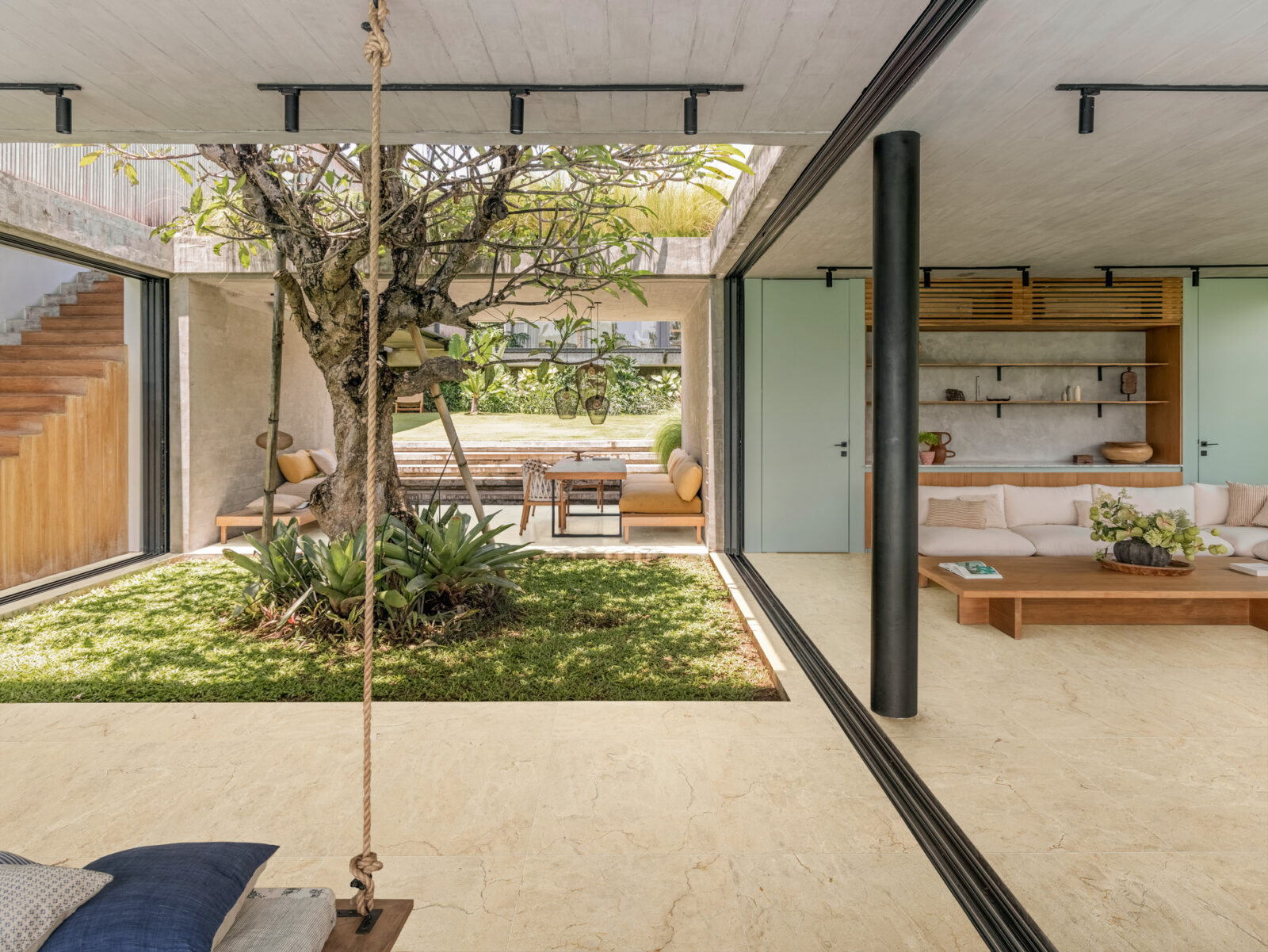
The strongest look in current Melbourne builds is a single surface that flows from the kitchen through sliding doors onto the alfresco with no visible change. The trick is a range that offers the same face in two specs: a smooth matte 9-10mm tile for inside and a textured anti-slip 20mm paver for outside, in the identical colour and format.
Concrete look tiles are the most popular way to do it: the grey tonal drift hides outdoor dust and the matching 20mm grip versions carry the exact surface across the threshold. Lay both zones on the same grid line with matched grout and the room visually doubles in size.
From the catalogue
Outdoor pavers in stock now
 In a room
Quarzo Broccato
300 × 300mm · matte
 In a room
Quarzo Imperiale
300 × 300mm · matte
 In a room
Granito Opale
300 × 300mm · matte
 In a room
Basalto Imperiale
300 × 300mm · matte
 In a room
Roccia Marfil
300 × 300mm · matte
 In a room
Roccia Venezia
300 × 300mm · matte
 In a room
Bisazza Diamante
299 × 299mm sheet · matte
 In a room
Murano Nobile
300 × 300mm sheet · matte
Browse & filter
Filter all 5,640 outdoor pavers
Showing 24 of 5,640 · priced per m² inc. GST
 In a room
Arabescato Firenze
1200 × 600mm · honed
 In a room
Calacatta Brillante
1220 × 610mm · honed
 In a room
Arabescato Firenze
1200 × 600mm · honed
 In a room
Emperador Provence
600 × 600 × 10mm · matte
 In a room
Travertino Onda
600 × 600 × 10mm · honed
 In a room
Emperador Perla
600 × 600 × 10mm · matte
 In a room
Paonazzo Perla
600 × 600 × 9mm · matte
 In a room
Emperador Ravenna
600 × 600 × 10mm · honed
 In a room
Emperador Taffeta
600 × 600 × 10mm · matte
 In a room
Emperador Ponente
600 × 600 × 10mm · matte
Made to order
 In a room
Travertino Reale
600 × 600 × 9mm · textured
 In a room
Marquina Tirreno
600 × 600 × 9mm · matte
 In a room
Paonazzo Cristallo
600 × 1200 × 9.5mm · matte
 In a room
Emperador Lucca
600 × 600 × 10mm · honed
 In a room
Emperador Maggiore
600 × 600 × 10mm · matte
 In a room
Piombo Carrara
600 × 600 × 9mm · matte
 In a room
Emperador Cortina
600 × 600 × 10mm · matte
 In a room
Emperador Eleganza
600 × 1200 × 10mm · matte
 In a room
Emperador Diamante
600 × 600 × 10mm · matte
 In a room
Emperador Puro
600 × 1200 × 10mm · matte
Made to order
 In a room
Marquina Stella
600 × 600 × 10mm · matte
 In a room
Emperador Lucente
600 × 600 × 10mm · matte
 In a room
Travertino Vento
600 × 600 × 9mm · textured
 In a room
Travertino Adriatico
600 × 600 × 10mm · matte
Outdoor paver FAQs
What is the difference between outdoor pavers and outdoor tiles?
Thickness and how you lay them. Standard outdoor tiles run around 9-10mm and must be glued to a concrete slab. 20mm porcelain pavers are structural: the same slab-glue method works, but they can also sit on a compacted sand and aggregate bed or on adjustable pedestals with no adhesive at all. We stock 2862 true 20mm pavers and 2778 standard-thickness outdoor-rated tiles.
How much do 20mm porcelain outdoor pavers cost per m²?
In our live catalogue, 20mm porcelain pavers run $20 to $2844/m² including GST. Standard-thickness outdoor tiles run $11 to $404/m². Add roughly $60-$120/m² for professional laying on a slab; sand-bed and pedestal installs are usually cheaper per m² because there is no adhesive or grout stage.
Are porcelain pavers better than concrete or natural stone pavers?
For most Australian outdoor areas, yes. Porcelain absorbs under 0.5% water, so it shrugs off frost, pool salt and chlorine, and it never needs sealing. Concrete pavers are porous: they drink in oil and tannin stains, grow moss on the shaded side and fade in UV. Natural stone such as travertine or bluestone looks beautiful but needs sealing on install and resealing every few years. Porcelain gets the stone look with none of the maintenance schedule.
Can I lay 20mm pavers straight onto grass or sand?
Onto a properly prepared sand and aggregate bed, yes: excavate, compact a road-base layer, screed a bedding sand layer, then lay the pavers with spacers. Straight onto grass is only suitable for stepping-stone paths where each paver sits on its own levelled pad. For decks, rooftops and balconies, adjustable pedestals let the pavers float over waterproofing with open joints for drainage.
Keep browsing